

/ News
The FQiX 300 is Niu's tech-overloaded take on the urban scooter
Niu's latest two-wheeler brings blind-spot detection, GPS, and OTA updates to the humble scooter.

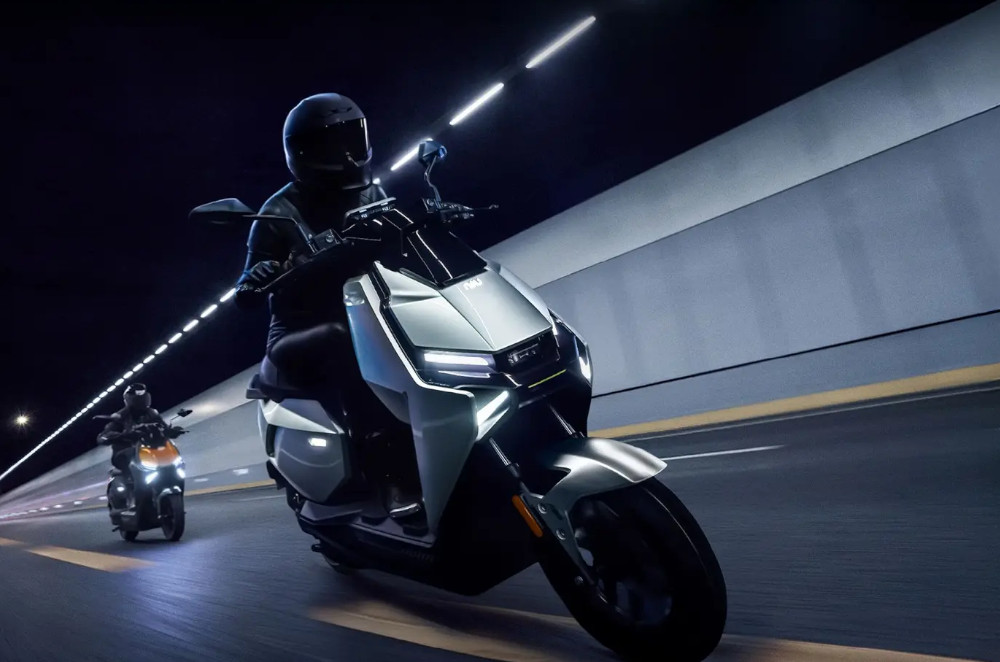
If the electric scooter bug has reached you, then there’s another brand worth watching out for. While electric scooters have a basic formula to follow, Niu, however, is taking a different approach with the new FQiX 300, packing the compact urban scooter with a surprisingly extensive list of rider aids and connected technology.
Among its headline features are ABS, traction control, blind-spot detection, automatic hold, GPS tracking, and an integrated anti-theft system. The FQiX 300 also comes with a 5-inch color TFT display, smartphone connectivity, navigation, Bluetooth, NFC unlocking, over-the-air updates, USB-A and USB-C charging ports, and a reverse assist function. It is an unusually comprehensive equipment list for a scooter positioned primarily for urban commuting.
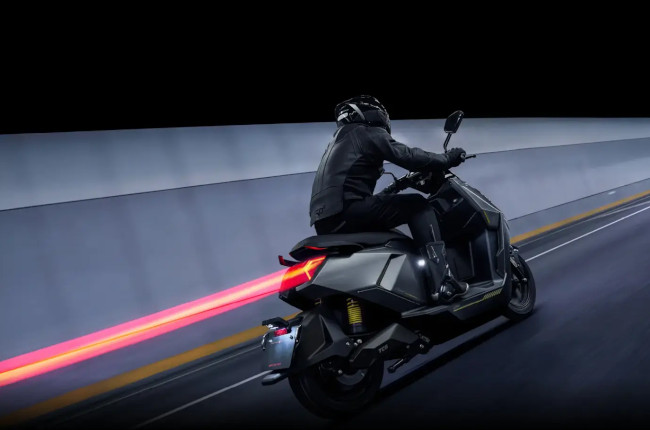
Niu has priced the FQiX 300 at €2,999 in France, placing it roughly around P218,477 before taxes and market-specific pricing are factored in. The scooter is classified under Europe's A1 license category, putting it in the same general class as a conventional 125cc scooter. Don’t be confused by the "300" in its name; that designation does not refer to a displacement equivalent.
Though it’s a tech fest on two wheels, performance is on the modest side. The electric motor produces a claimed peak output of 4,100 watts, or around 5.5 hp, while top speed is rated at approximately 80 km/h. More than enough grunt to zip around tight city streets.
Power comes from two removable 72-volt, 28Ah batteries, which Niu says can deliver 100 to 109 km of range. Other practical features include 14-inch wheels, a 31-liter underseat storage compartment capable of accommodating a full-face helmet, a 785 mm seat height, and five selectable riding modes. Niu claims a full charge for both batteries takes around six hours.
The FQiX 300's biggest selling point is ultimately its level of technology. Features such as ABS and traction control are increasingly common and easy to justify, particularly from a safety standpoint. Blind-spot monitoring, integrated navigation, OTA updates, and a suite of connected functions, however, remain uncommon in this price bracket.
Whether commuters actually need all of those features is another question. For a scooter designed primarily for short urban trips, some of the technology may seem excessive. Then again, EDSA traffic could be a place where scooters jam-packed with tech make sense.
Tagged Under
Related Articles
-

Yamaha takes the covers off the all-electric Aerox E in India / News
Yamaha has just launched the Aerox E in India, a fully electric scooter with 12.6 hp, 48 Nm of torque, and 117 km range.
-

VinFast's swappable battery e-motorcycles are coming to the Philippines / News
VinFast’s three e-motorcycles are now up for reservation in the Philippines, with first deliveries expected to roll out in July 2026.
-

The new Suzuki Burgman Street brings more tech and a refreshed design / News
The Burgman Street is updated with a fresh look and a slew of new tech features. Here's everything that's new.
-
Would you like to see Honda’s E-VO electric motorcycle in the Philippines? / News
Honda has pulled the covers off the E-VO, a fully electric futuristic motorcycle in the Chinese market.
-

Verge becomes the first motorcycle brand to deliver a production solid-state battery bike / News
Verge Motorcycles has delivered the world’s first production bike with a solid-state battery, promising huge range and ultra-fast charging.
Latest News
-
BMW Motorrad marks Nürburgring centenary with three exclusive M motorcycles / News
BMW Motorrad marks 100 years of the Nürburgring with exclusive M 1000 RR, M 1000 R, and M 1000 XR models.
-
The all-new Lambretta J200 has arrived in the Philippines; prices start at P265,000 / News
Lambretta brings the J200 to the Philippines, pairing classic scooter styling with a 174.5cc engine and modern tech.
-
Harley-Davidson’s Deadwood is a vintage bobber bike for the modern age / News
Harley-Davidson's newest bobber pairs postwar rebellion with 2026 rider tech, and it's landing right in time for Sturgis.